
Academic research is a job.
The Evoke Lab largely consists of doctoral students who are training for academic careers. Academic careers are prestigious, even though they are increasingly precarious: this precarity is enabled by the belief that academic work constitutes some kind of higher calling performed by extraordinarily intelligent people (Solomon and Du Plessis, 2023). We take pride in our work and want to be recognized for the creativity and quality of our scholarship, but we reject any self-objectification that would reduce our value as humans to the value of whatever we produce. Any human life derives value from the strength and beauty of its relation to other people, not from a career. An academic career is nice work if you can get it, but no one’s value as a human being can be determined by what kind of job they do.
We are a community of writers.
Our central activity is sharing, critiquing, and workshopping our written work. We are open to any form or genre of academic work (including experimental or genre-defying works), but we approach our shared practice with an emphasis on giving and receiving constructive criticism to written works-in-progress.
We seek liberation of ourselves and those upon whom our freedom depends.
Echoing the Statement of the Combahee River Collective (1977), we recognize that “the major systems of oppression are interlocking. The synthesis of these oppressions creates the conditions of our lives.” Questions of race are fundamentally questions also of sex, gender, class, disability, citizenship, and any other form of socially sanctioned difference. As Dr. Sheena Erete writes, for many researchers, especially those who come from minoritized communities or work in Black and/or feminist intellectual traditions, resistance to structural oppression is a central, motivating part of research and design. However, she also characterizes this work as bound up with “intersecting systems of power that attend to and center whiteness, capitalism, individualism, and innovation.”
Academic research is important and valuable work, but it is not innocent. As a research lab based in an American R1 university in a STEM department, we are all working in institutional conditions structured by “discriminatory beliefs, policies, values, and distribution of resources” (McGee, 2020). Still, even given this inevitable limitation, we commit to seeking liberation (a phrased borrowed with attribution from the scholar Katherine McKittrick), which demands “simultaneous recognition of negative demands to stop a particular kind of harm and an open-ended, non-teleological process of collective introspection” (Crooks, 2022).
We have traditions of resistance to guide our academic work.
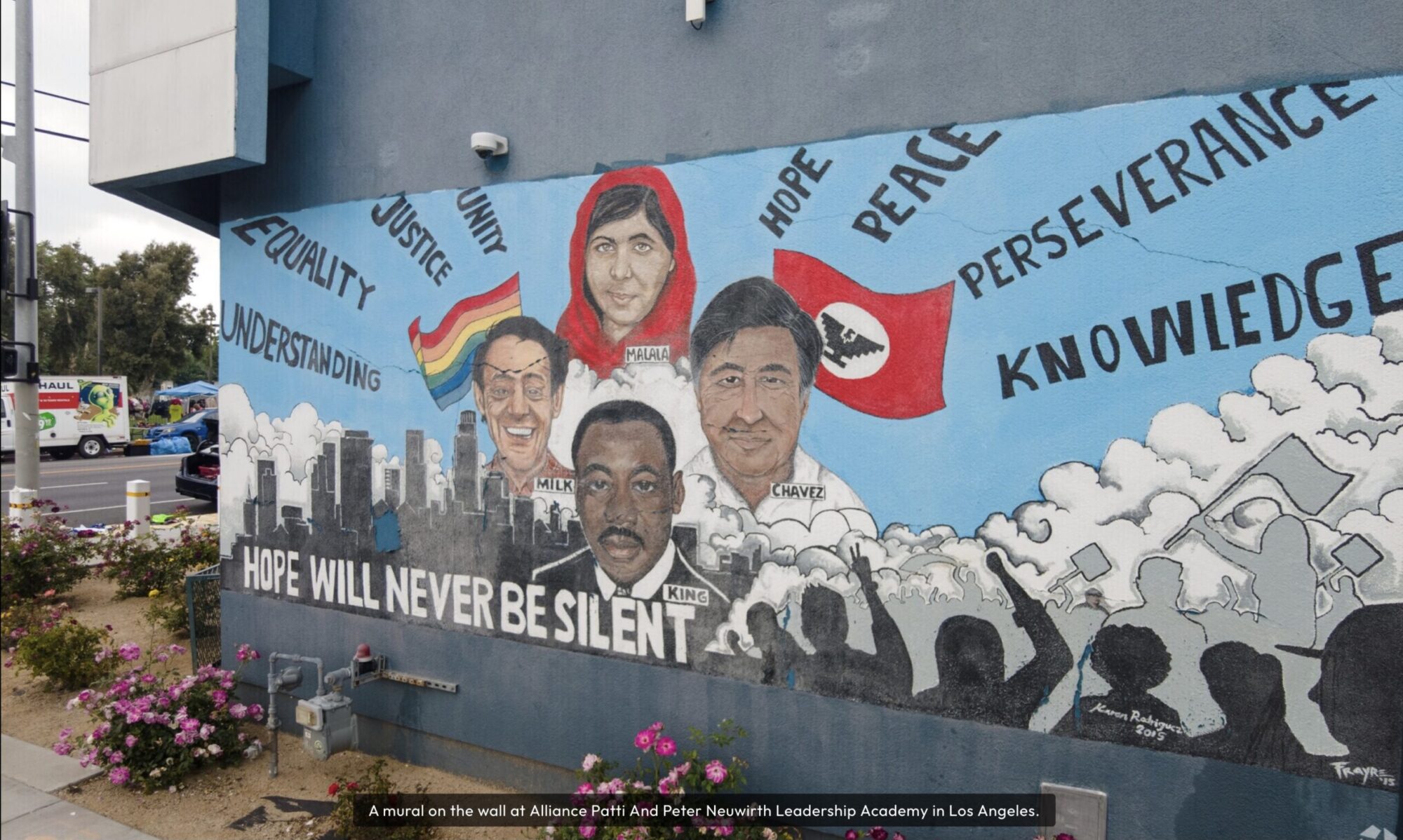
Academic insurgency is a model of scholarly life that valorizes “interdisciplinary scholarship; experiments with genres of writing; engagement with multiple audiences, both inside and outside universities; and attention to the relationship between theoretical knowledge and its practical effects on communities that have experienced marginalization” (Risam, 2019). The concept of academic insurgency directs us to center the minoritized communities we care about (and frequently come from) in our research. We also recognize the value of the intellectual work done in working-class communities of color. We do not allow that professional, academic knowledge is superior to other forms of knowledge, particularly to the lived experiences of community members and elders. The practices to which a theory of academic insurgency gives rise necessarily link higher education to multiple communities and require the recognition of knowledge as a public good.
References
The Combahee River Collective. (2014/1977). A Black feminist statement. Women’s Studies Quarterly, 42(3/4), 271–280.
Crooks, R. (2022). Seeking liberation: Surveillance, datafication, and race. Surveillance & Society, 20(4), 413–419. https://doi.org/10.24908/ss.v20i4.15983
Crooks, R., Contreras, I., & Besser, K. (2015). Herstory belongs to everybody or The Miracle: A queer mobile memory project. InterActions: UCLA Journal of Education and Information Studies, 11(2).
Erete, S. (2021). Using black feminist epistemologies and activist frameworks to counter structural racism in design. Interactions, 28(5), 56–59. https://doi.org/10.1145/3479981
Healy, J. (2016). The Components of the “Crit” in Art and Design Education. Irish Journal of Academic Practice 5 (1).
McGee, E. O. (2020). Interrogating Structural Racism in STEM Higher Education. Educational Researcher, 49(9), 633–644. https://doi.org/10.3102/0013189X20972718
Morrison, T. (2017, May 29). The work you do, the person you are. The New Yorker. https://www.newyorker.com/magazine/2017/06/05/toni-morrison-the-work-you-do-the-person-you-are
Risam, R. (2019). Academic generosity, academic insurgency. Public Books.
Solomon, S., & Du Plessis, M. (2023). Experiences of precarious work within higher education institutions: A qualitative evidence synthesis. Frontiers in Education, 8, 960649. https://doi.org/10.3389/feduc.2023.960649
Schappell, E. And Brodsky Lacour, C. (Fall 1993). “Toni Morrison, The Art of Fiction No. 134.” The Paris Review. Issue 128.